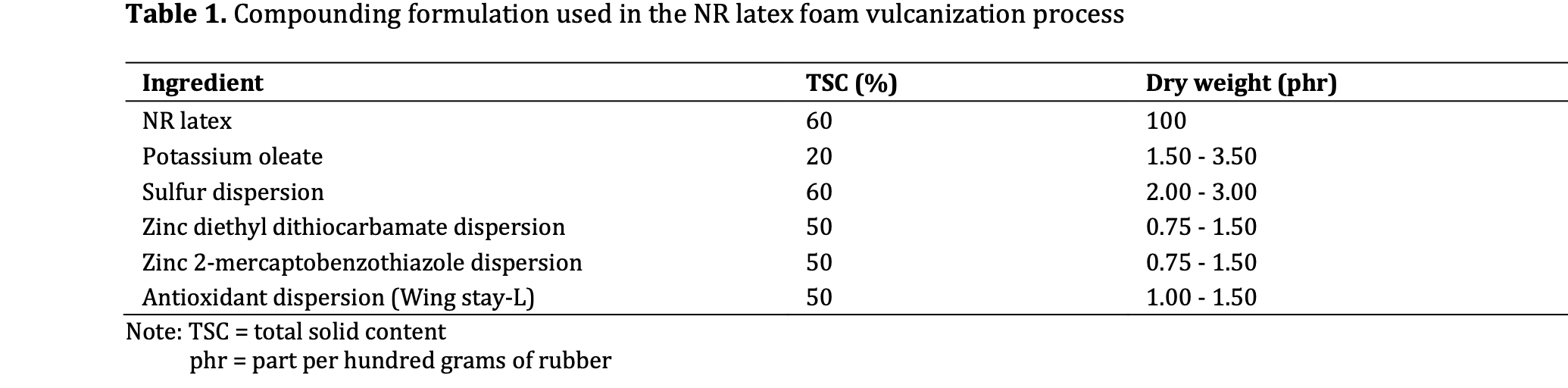
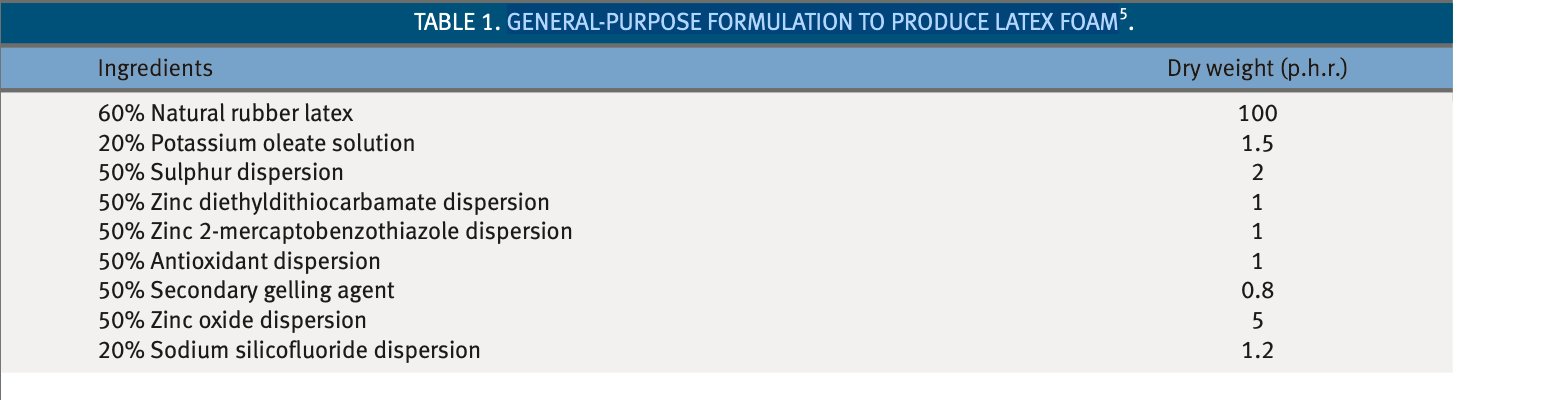
Check these two papers for dunlop process.
1 Like
Please read my first post. I posted a link to the same website in it.
Good point. I’m assuming this might be caused by the use of well water.
From what I understand, the additives (like zinc oxide, sulfur, soaps, ammonia, etc.) are needed to stabilize and cure the latex, but most of the water-soluble ones get washed out after foaming. The final product is mostly natural rubber, but there will always be a small percentage of curing agents left. That’s why “100% natural” really means “mostly natural with a few essential additives.”
That’s basically correct. Sulfur is left behind. During vulcanization, latex’s (natural or synthetic) polyisoprene molecules are heated and cross-linked with molecular bonds to sulfur, forming a 3-D matrix.
As to what other chemicals used in the Dunlop process are left behind. That would depend on how well the foam is washed.
And natural latex, directly from the rubber tree, contains proteins that can trigger allergic reactions in sensitive individuals. Some of those may be left behind.
And as I previously posted, GOLS certification means a product, typically made of latex, contains more than 95% certified organic raw material by total weight and meets strict environmental and social standards. Many online mattress stores are incorrectly interpreting that to mean >95% natural latex.
Caveat Emptor
2 Likes