As per the title I am 48 and have near debilitating joint pain at times. I typically am a side sleeper and am 5’8 and 225 lbs.
I realized last year my 8 year old mattress might be contributing to this pain, or at least not helping alleviate any of it. Since then I’ve gone to several mattress stores and tried many popular brands but still have not made a purchase. The ones I did think felt the best for my needs were much more expensive than my budget of $1,000.
One of the main problems I’ve had with mattresses past is that they always end up becoming indented and thus feel less supportive after some time. I’ve also had issues with them exacerbating my already bad shoulder and hip pain. Id love to find a mattress that is built well and able to support me while being comforting at the same time. With a MAX budget of $1,000. I would greatly consider something less expensive if the quality is not sacrificed in the price.
Welcome to our Mattress Forum but sorry to hear about the joint pain
Unfortunately, it tends to come with the territory when purchasing a “budget” mattress. As a rule, they use cheaper, lower-density foams to keep the price low and almost certainly after 8 years, that foam would have started to fail.
Correct.
I do think there are beds in your budget that will better suit your needs, but keep in mind that after about 5 years…you’re probably going to be looking to replace them again.
In fact, because of that, I’d probably recommend something modular where you can simply swap the top comfort layer out, as the coils are almost never the issue…but once foam fails, there’s nothing you can do to “firm it back up.” That said, it’s usually more expensive out of the gate to purchase a bed with swappable layers, but down the line (3-5 years from now) you’ll save money when you only have to change layers and not the whole bed.
Places to start that are closest to your budget:
DLX Premiere Hybrid
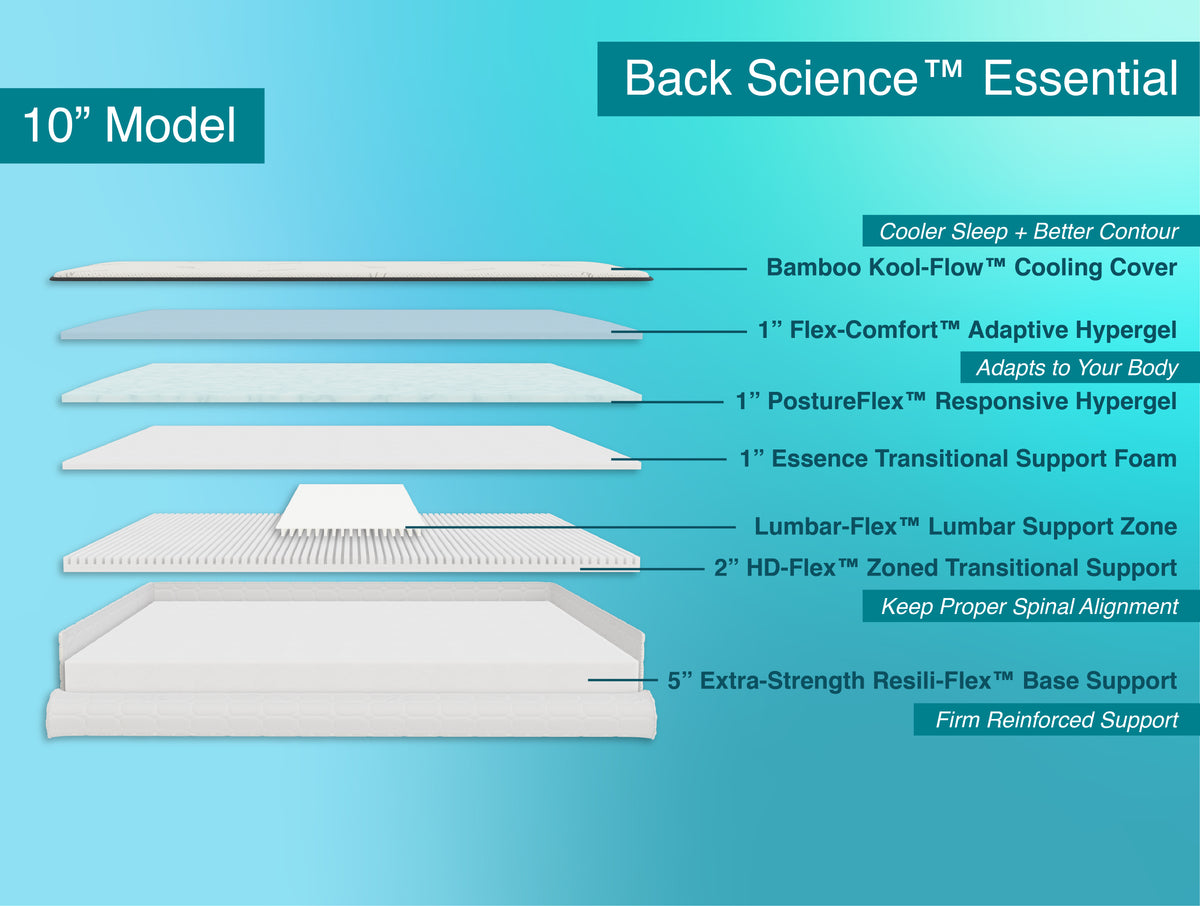
Back Science has a number of options, the Essentials being in your budget. You may also find the Tempflow Original worth a look.
Hi @illwellynmoss, the $1000 or under category is my favorite to research for because with creativity and a lot of research you can still have a great mattress. Like the Backscience mattress Nikki recommended, that’s actually a really well constructed bed for the price with a great warranty.
I have a few options to offer as well.
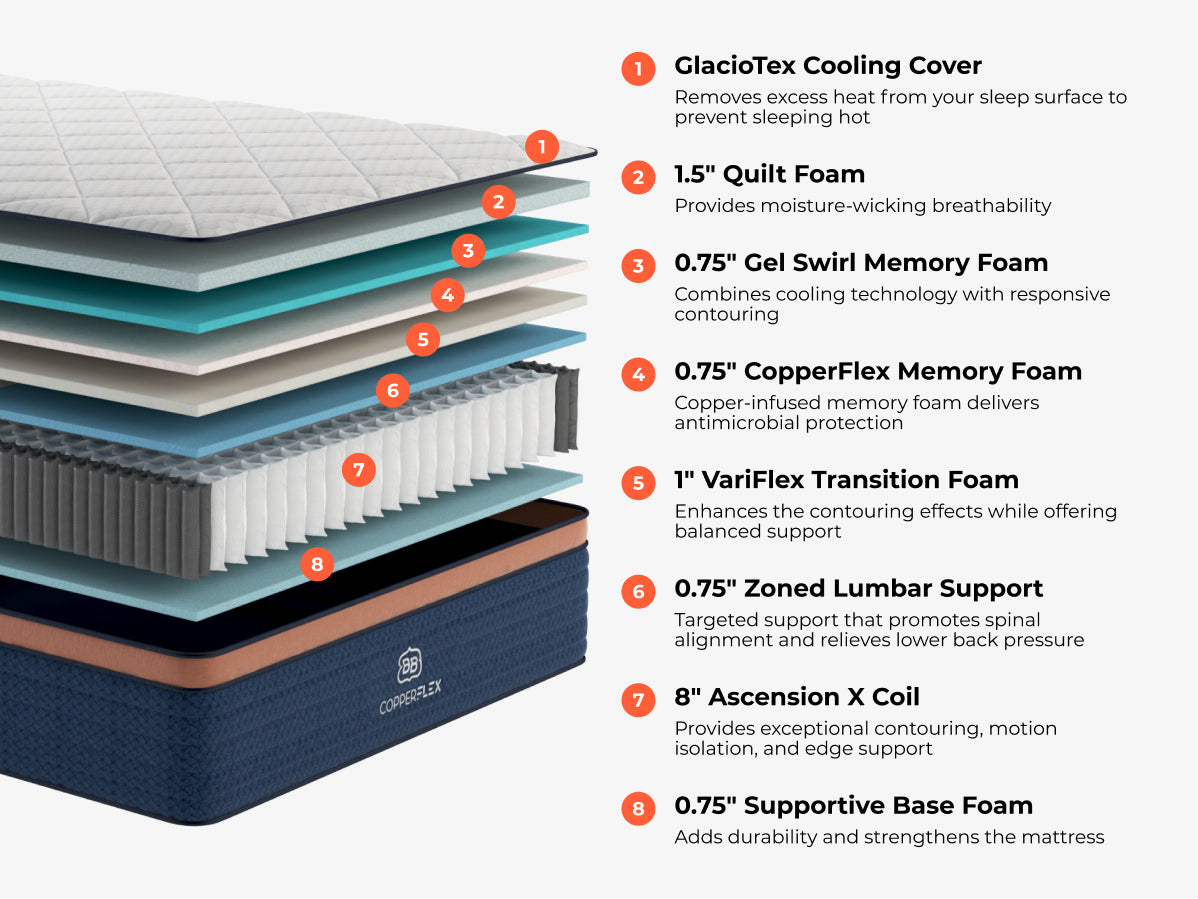
Brooklyn Bedding copperflex pro. This is a great choice for anyone who wants a very high quality version of a standard poly foam hybrid. The new top stitching design is a big improvement over the previous one
If you would like to try something even more affordable, engineered sleep has their “today” mattress for $479 for a queen. If you added a topper, you could keep your final cost to about $600 and the topper would protect your mattress.
Glacier original hybrid - this uses a good quality spring base with also good quality foams on top, primarily memory foam. The top is quilted nicely, and i am a fan of their beds. I’ve got the glacier apex and love it, though the original hybrid is much more affordable with probably similar performance.
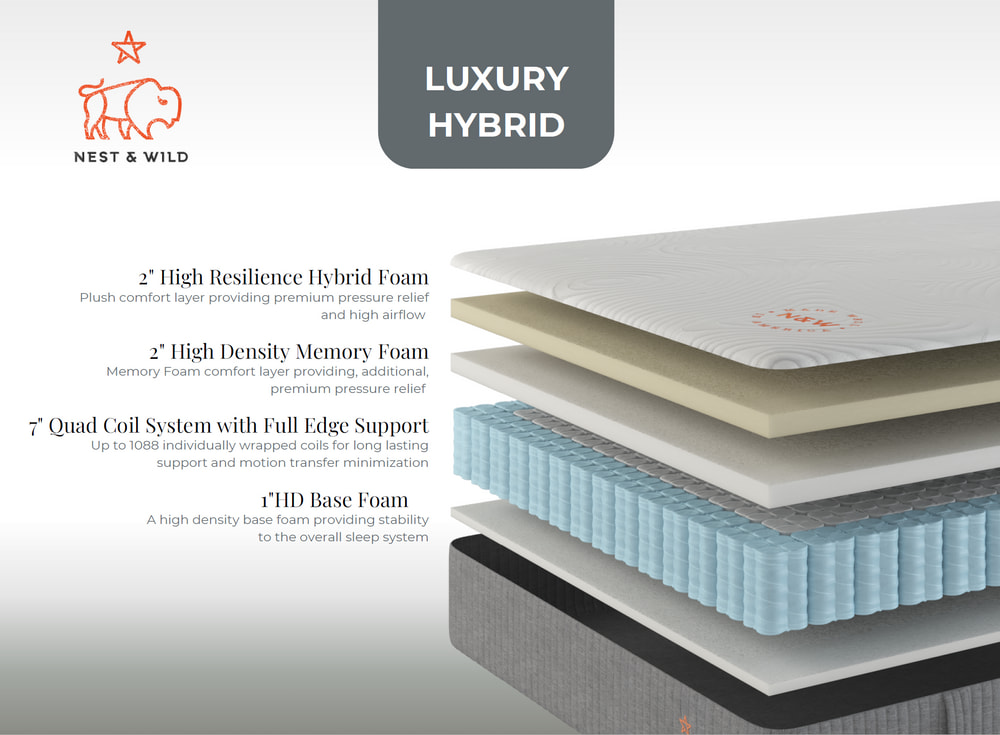
Nest and Wild hybrid. This is my personal favorite mattress for under $1000. It’s not well known at all here on the mattress underground because it doesn’t seem people have looked into them yet or given them a chance, but I think if you were to try it you’d love it and have no issues with durability. It’s not flashy but the reason it’s so comfortable and durable is due to the quality of the components. The foams are made in house, have a 3lb density even after the pre stressing process (which is very high density compared to most beds, even higher than some in much higher price brackets), and the base is a texas pocket springs quadcoil which is one of the best and most durable spring bases on the market. The bed also comes with a 15 year warranty.
Thank you for responding it was very helpful. I was wondering how the backscience classic feels? I’ve also never heard of hypergel foam before, is it more durable than memory foam?
Thank you for the recommendations. I am ok with spending on the higher side, i just want to ensure I don’t spend over $1,000. I’m curious about the copper flex pro it looks interesting. How does it feel to sleep on it and how does the top stitching impact the way it feels? The nest and wild looks a bit simple but I don’t think that is always indicative of poor quality. I’m curious what that feels like too, especially the foam. Do you know what the foam is made of? I’m not sure if I like memory foam or latex but I’d be open to it if it would help.
Here is the build of the backscience. It has a high quality bamboo cover which is naturally drying and cooling. From the description, it has the contouring of memory foam but doesn’t make you feel sunk in, and has zoned support near the hips. Also it uses a high density foam base rather than a spring base. I have not tried this one but my guess would be that it would feel soft, contouring and supportive. A foam base does have a different feel compared to springs but that is a preference. I could sleep on either a foam or spring base.
It’s made with a quilted glaciotex cover for cooling, has 1.5" of quilted foam in the top. Which the quilting is there to basically give you that premium feeling surface and the very plush top before reaching their memory foam layers. Then once your weight settles in, the memory foam layers give you a nice contouring feel and the zoned coils hold up your weight in the heavier areas. This will feel like a very premium and more cooling version of the standard expectation of how a mattress should feel. So it’s a well known feel, but a very high quality version of that.
The cover is not quilted, though it does use cooling technology and has a nice texture on the top. The top layer is latex/memory hybrid foam that is very soft and conforming, but still responsive. The layer under that is medium-soft memory foam that he makes with a different process than the typical memory foam. So while it is memory foam, it’s made to also be responsive so you don’t get that same kind of stuck feeling like usual with memory foam.
Then the base is the texas pocket spring quadcoil. Which means the springs are connected in pockets of 4 to avoid movement and to be more supportive. This bed feels very cool on the top, plush on the top layer, then the conforming transition layer, and then very supportive with a conforming/strong support form the quadcoil.
Ultimately you would be very comfortable on any of these options. There are many here who love backscience, and I’ve also read people are really happy with the copperflex pro and that bed felt good when i tested it in store. I bought my parents a nest and wild to replace their 12 year old memory foam bed and my dad’s back pain went away, sometimes i sleep on it as well.
Hi there ~ I can definitely relate to the frustration of spending months researching mattresses and then realizing that the ones that feel best are often way outside the budget.
One thing that stood out to me in your post is that you’ve had two recurring problems: mattresses eventually developing body impressions, and ongoing shoulder/hip pain. I went down a similar path trying to solve hip and shoulder discomfort and kept focusing on finding the “perfect” mattress that was supportive enough not to sag but soft enough to relieve pressure points.
What surprised me is that the biggest improvement I experienced didn’t actually come from replacing the mattress. I eventually came across the concept of incline sleeping and spent some time reading about it on the Incline Sleep website. The idea is to place the entire mattress on a gentle incline rather than sleeping completely flat.
I decided to try a foam incline wedge underneath my mattress, and for me it seriously reduced my hip and shoulder pain. What I liked is that I was still sleeping on my regular mattress. The incline happens underneath the mattress, so you’re not lying on a wedge pillow or some special sleep surface.
There are also incline foundation options available, but the reason I mention it is because it might be something worth researching alongside your mattress search. If your current mattress is eight years old and developing indentations, replacing it may absolutely be necessary. But after all the mattress shopping I did, I realized that sometimes the issue isn’t only the mattress itself—it’s also how your body is positioned on it for 7–8 hours every night.
I’m certainly not saying incline sleep is the answer for everyone, but if you’re trying to stretch a $1,000 budget and avoid another cycle of buying mattresses that eventually lose support, it might be one more thing worth looking into before making a final decision. It certainly made a huge difference for me so I’m trying to share my experience with others who are searching for a solution. Good Luck!
Are you set on a foam mattress? If your main complaint is indents at your weight then ditch the memory foam and hybrid mattresses.
You can do latex which won’t indent but under $1k might be hard.
Or you can do an affordable spring mattress and then add a non-memory-foam topper. You can try a supportive polyfoam like ComfortTech Tranquility topper which is about $100 at Home Depot.
I just found something that seems to work for me. I did a ton of exhausting research. I knew that I needed a new bed and mattress. The solution ended up being a slatted platform bed, a sleep on latex firm mattress with a DIY mattress 3 inch extra firm Talalay topper. Turned out to cost about $1300 for the mattress and about $450 for the topper.
 but sorry to hear about the joint pain