Best Mattress for Side Sleepers – Which One Should We Buy? Need Your Advice

Hi everyone,

Me and my wife are both side sleepers, and recently we have been trying to improve our sleep quality by finding the best mattress for side sleepers that offers good comfort, pressure relief, and long term support.

since we are both complete beginners when it comes to buying a mattress. we have been trying to figure out what actually makes the best mattress for side sleepers, especially something comfortable, supportive, durable, and good for everyday use.

we have done a lot of research online and shortlisted a few mattresses that keep getting recommended in reviews and comparison articles, but now we’re a bit confused about which one would be the best choice for us:

  • [Nectar Memory Foam Mattress for Side Sleepers seems affordable and very popular
  • **[Leesa Sapira Hybrid 11" Mattress] looks more premium with extra comfort and support
  • **[Helix Midnight Mattress] - many people say it is one of the best mattresses for side sleepers
  • [DreamCloud Hybrid Mattress] - seems like a good balance of comfort, support, and value

From what we understand so far:

  • Memory foam mattresses help reduce pressure on shoulders and hips
  • Hybrid mattresses seem better for airflow, cooling, and support
  • Softer mattresses may feel more comfortable for side sleeping positions
  • Mattress firmness seems very important depending on body weight and sleeping style
  • Cooling features may help prevent overheating during sleep

still, it is hard to know what really matters when you actually sleep on a mattress every night for months or years.

we would really appreciate advice from people who have real experience using these mattresses:

  • Which mattress do you use as a side sleeper?
  • Is it comfortable and supportive for everyday sleep?
  • Did you notice any problems after using it for a few months?
  • Which mattress would you personally recommend for side sleepers?
  • If you had to buy again, would you choose the same mattress?

we’re just trying to make a smart decision and avoid wasting money on the wrong mattress. Any honest feedback, recommendations, or personal experiences would really help us out :folded_hands:

1 Like

Of all these, id pick the helix midnight luxe. It’s a well built bed. But for a personal favorite my recommendation is always the nest and wild hybrid. Because its less than $1000 for a queen with the current discount, he uses one of the best spring systems on the market and makes the foam for his beds in house.

What that means is that rather than being limited to what is available to buy and put into a bed retail, he made his own specifically to give that mattress his desired characteristics. I could go into more detail if you’d like, i bought one for my parents and my dads back pain went away and his back was pretty rough.

2 Likes

Thanks @Gc123 this honestly makes me lean more toward the Helix Midnight Luxe now. I kept seeing it in reviews, but it’s more reassuring hearing from someone who actually thinks it’s genuinely well built.

The Nest and Wild Hybrid also sounds interesting, especially with the custom foam and the feedback about your dad’s back pain improving. That kind of real experience is way more useful than marketing claims. right now I am probably leaning Helix for the safer overall choice, but I’d still love to hear how the Nest and Wild feels for side sleeping and cooling after long-term use.

1 Like

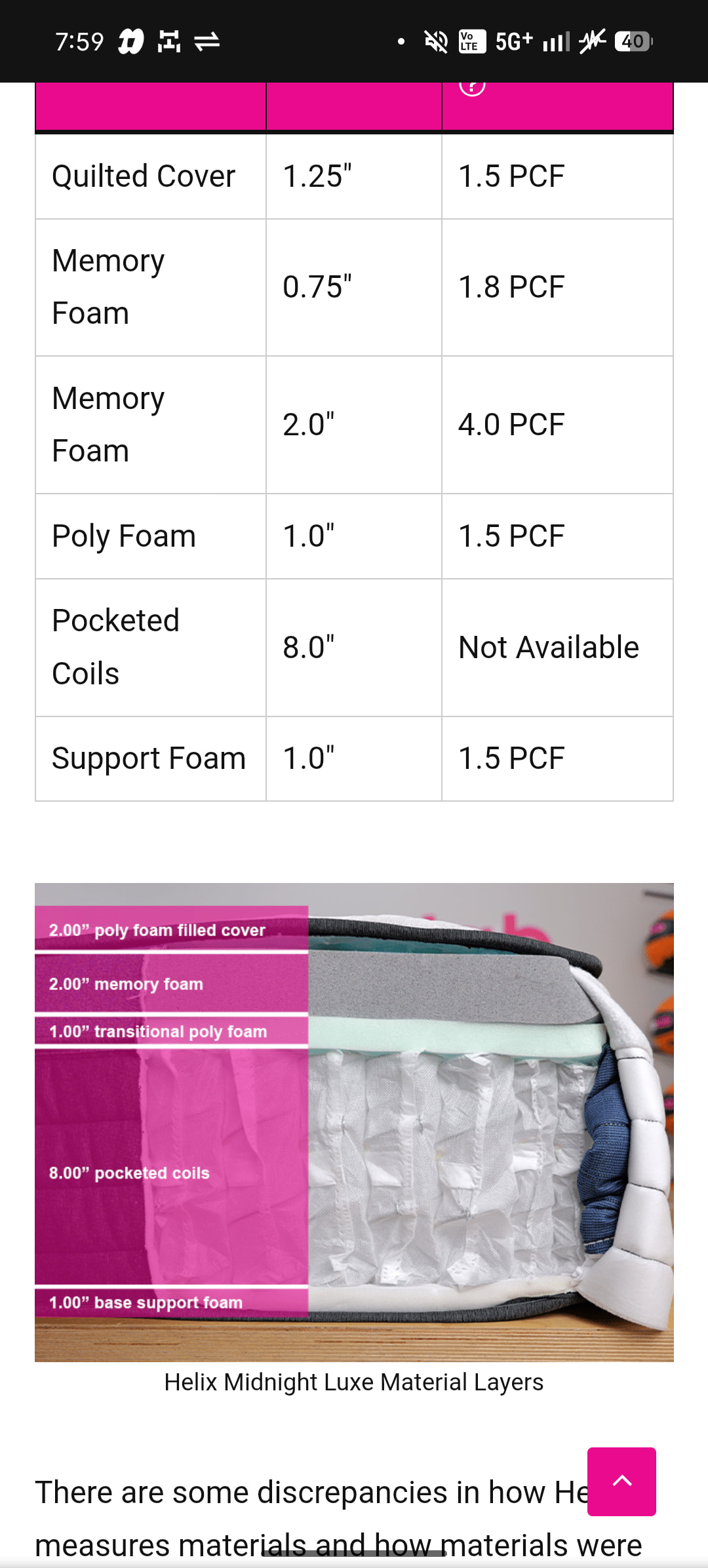
Once you understand the assembly of beds it definitely does help a lot with getting out of the rabbit hole. Here’s a picture and description of the layers in the midnight luxe:

It has a quilted poly foam cover with a dense layer of memory foam underneath, then a layer of transition polyfoam before the springs.

How this feels is soft on the top with medium response and a solid support underneath. The memory foam is slow responding but the polyfoam cover modifies that a bit. I’m not sure what spring system they use but I’m sure it’s good. If you were to choose this, the glaciotex cover has a nice design on the top. Is it worth almost $2000? Well, to me that’s a lot considering the cost to build a mattress and quite a few companies over charge in my opinion. But that’s the market they’re going for, the “luxury” market. All things considered that’s not that much in the long run considering you use a mattress for years.

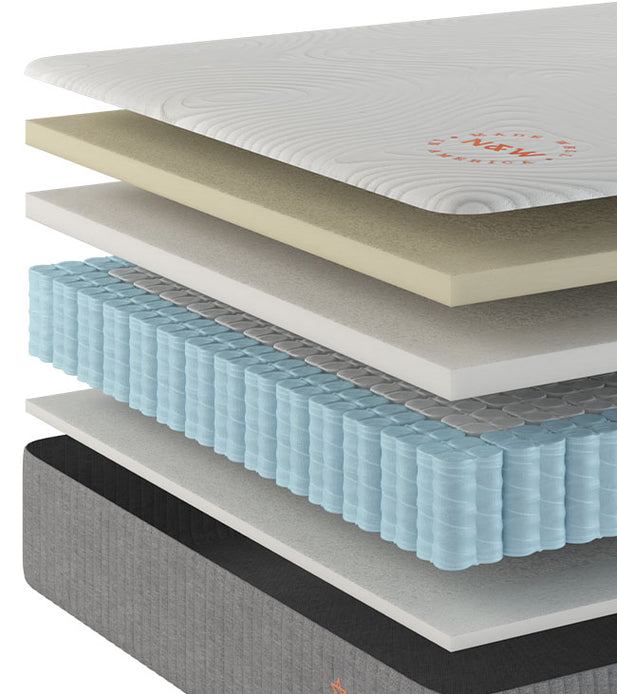
Here’s a photo of the build of nest and wild:

This looks simple, but when you look at the actual specs, there’s a lot more thought that goes into this than just a spring with 2 pieces of foam on top and a cover.

The layer of foam on the bottom protects the springs and holds them together.

It has a texas pocket springs medium firmness quadcoil, which are preloaded springs, connected in pockets of 4 to aid in support and also durability. There is full edge support meaning that not only are the springs on the sides stronger, so are the ones on the top and bottom.

The layer sitting on top of those is 2" of pneumatic memory foam that is medium - soft firmness.

Then for the top plush layer, you have 2" of soft memory foam/latex hybrid foam. What this accomplishes is you get the conformity of memory foam, but it is more responsive rather than staying sunk in. It’s also open cell for breathability so it helps you stay cool.

The cover is a cooling cover with phase change material. Basically it releases heat fast.

How the bed feels is soft on top, with enough conformity for side sleeping, and enough support for back sleeping.

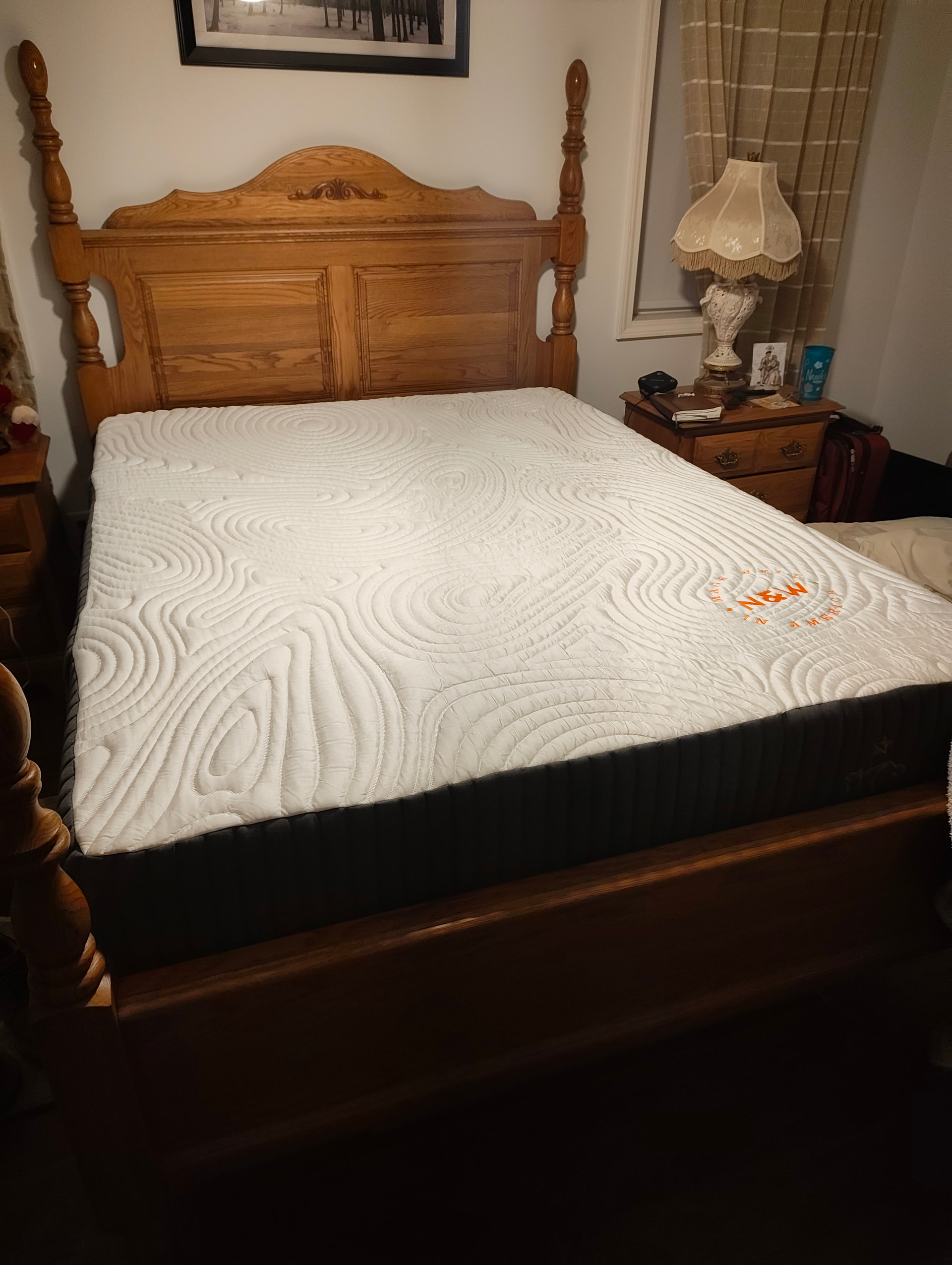
For under $1000 the value here is fantastic. Here is a photo of my parents bed:

1 Like

I’m currently on a sleep trial currently with Helix Midnight Elite and now Twilight elite and I’ll give you my review. I’m 5’10 185. Bought the Helix for its reviews and side sleep reviews. It was great when I first got it. Slept like a dream, no more back and shoulder pain or arm numbness. That lasted for about 30 days and then I sunk through the entire comfort layer had pressure points and pain again. I’m not sure if it was just the mattress settling into its normal position or if it was defective but it was really soft! It probably had about 2-4 inches of sink in when i sat and layed on it. It felt like the coils were pushing into my side when I slept on it. Now I’m onto the Helix Twilight Elite and it’s very firm and has basically no cushion feeling at all. The first few nights so far for me is pain free, but not for my wife, but it’s like sleeping on a stack of books. For $3k for a queen I feel I should be blown away and I’m not.

I really wanted to love these mattresses but not so much. Had the Midnight stayed the way it felt on day one it would have been perfect. It was plush on top and had good support but that all changed quickly.

I read ton’s of reviews, pages etc before buying this mattress. No idea where to go next.

1 Like

Well i know im constantly going on about Nest and Wild but honestly it’s a unique and well built local product. He didn’t just put some memory foam into a nice cover with some springs and call it a day. He designed his own custom foam using everything he learned over the years to specifically make the best bed you could get for the money.

I can promise if you give them a try there’s a high chance you won’t regret it. Im 215lbs at 5’11" and it feels amazing to me although im borderline for needing the firm spring model.

1 Like

First off, I honestly think you’re approaching this the right way by doing so much research before buying. Mattresses are expensive, and when you spend 7–9 hours on something every night, it makes sense to really think through comfort, support, durability, pressure relief, cooling, etc. A lot of people just buy whatever is on sale and hope for the best.

I went through a very similar mattress research spiral myself, especially trying to solve side-sleeper pressure issues in my hips and shoulders. I learned a lot about memory foam vs hybrids, firmness levels, cooling materials, zoned support, all of that, but the one thing I wish I had discovered earlier is the concept of incline sleeping. I stumbled across it after going down my own research rabbit hole :rabbit:

There’s a site called Incline Sleep that explains it well, but the basic idea is slightly tilting the mattress instead of sleeping completely flat. I eventually tried a foam wedge system underneath my existing mattress, and surprisingly it made a bigger difference in my hip and shoulder discomfort than switching mattress materials did. I did this because it was the most affordable, but they have complete incline sleep foundations too.

Side sleepers usually do need good pressure relief around the shoulders and hips, and hybrids can help with airflow and long-term support. But after all my own research and trial-and-error, I realized that sometimes the issue isn’t only “which mattress,” but also how your body is positioned overnight.Obviously personal comfort seems incredibly individual.

The reason I mention incline sleep is because it gave me relief without needing to endlessly chase the “perfect” mattress setup. It worked with the mattress I already had instead of starting another expensive cycle of exchanges and topper experiments.

Not saying it’s the answer for everyone, but since you’re clearly putting a lot of thought into improving sleep quality overall, I think it’s one more interesting thing worth looking into alongside the mattress research. Good luck to you!!

I think what makes mattress shopping frustrating is that many models are built around an average sleeper, but real people rarely fit that mold. Your experience with the Helix mattresses shows the challenge pretty well. One gave you the cushioning you wanted but seemed to lose support, while the other corrected that but went too far in the opposite direction.

This is why I’ve started paying more attention to manufacturers that allow more adjustment instead of only offering a few fixed models. For example, Matelas Personnel in Quebec takes a more customized approach, with different mattress constructions and comfort options depending on the sleeper’s needs rather than trying to make one design work for everyone. I’m curious, after going through two expensive trials already, do you think your next mattress needs more adjustability, or are you still mainly trying to find the right material combination?

Have you looked at Nest Bedding at all (different from Nest and Wild). I find their products high quality and thoughtfully designed. They also keep them somewhat simple and test heavily before they manufacture.

My experience with Helix as a brand is they are good on paper but not tested enough. They market aggressively and then when reviews get bad they just create a new shiny thing with poor QA.

DreamCloud is very much a TikTok brand right now and feels like they are trying to be a cheaper Helix tbh.

If you don’t want to expand your brand choices then out of what you listed I would go with Nectar. At least you know what you’re getting.

Hi! I’m a side sleeper too and I went through a bit of mattress hell trying to find the best fit for lumbar support while allowing enough sink for my hips and shoulders. I really wanted to love latex, because my spine hates most memory foam mattresses, but the latex I tried had the opposite problem of memory foam, where instead of not enough support, there was too much resistance pushing back on my body. After trying a few different mattress brands I ended up with just your basic pillowtop innerspring hybrid.

Unfortunately all bodies are so different in what we need so hard to say what will work best for you guys, but I wish you only the best in finding the perfect fit!

2 Likes

One thing I would add after seeing all the recommendations here is that the “best side sleeper mattress” lists can be a little misleading. Most of those mattresses are designed to work for a wide range of people, but side sleepers can have very different needs depending on weight, shoulder width, and how much contour they actually like.

I’d pay more attention to the materials and construction than the ranking. A softer mattress is not automatically better if the support underneath does not keep your body aligned, and a firmer mattress is not always the answer if it creates pressure around the shoulders and hips.

This is why I find manufacturers that offer different builds interesting. For example, Matelas Personnel takes more of a customization approach with options around latex, coils, and comfort layers, which can be useful for couples who do not fit the “average sleeper” profile.

Have you and your wife noticed whether you prefer more of a sinking memory foam feel or the more responsive feel of latex/hybrid mattresses? That usually helps narrow things down much faster than comparing brand lists.

Has your twilight softened at all like the midnight?

Hey hloduca,

There is still not quite enough information to make a confident recommendation since we know you are a side sleeper who is looking for the balance between pressure relief and lumbar support, but we don’t know your height, weight, or body type yet. Those factors can make a huge difference in how a mattress feels.

From what you described, it sounds like your biggest issue is finding the middle ground. Enough sink for your shoulders and hips, but not so much that your spine feels unsupported. You didn’t love memory foam because of the stuck-in-the-bed feeling, and you didn’t love latex because of the responsive pushback.

If I’m remembering correctly, you had looked at a Naturepedic model previously. If that was the case and it was a latex model, it’s worth noting that not all latex mattresses feel the same. The type of latex, the thickness, and how it is combined with other materials can dramatically change the experience. Since you are in the Bay Area, European Sleep Works could also be worth considering because they use combinations of springs, latex, microcoils, and wool rather than relying on a single material feel.

If you are set on avoiding latex, then based on what you described I would focus on hybrids with zoned coil support and a softer comfort layer.

The Leesa Sapira Chill Hybrid in Plush would be one I would put on your shortlist because it is closer to the pillowtop hybrid feel you said worked for you. It has supportive coils underneath with more cushioning on top for side sleeping. The Sapira Hybrid would be the slightly safer choice if you want something more balanced and less plush. Both of these are built with their new GreenFlex foam layer gives it a responsive feel that may be a good compromise if you dislike both the pushback of latex and the slow sink of traditional memory foam. It is a biobased foam that reduces the sinking feel and does not push back as much as latex. So it may be worth consideration.

Another mattress that sounds very close to what you described is the GlacierSleep Apex Hybrid. With Soft, Medium, and Firm options, it gives you more ability to dial in the balance between pressure relief and support. Without knowing your height and weight, I wouldn’t pick a firmness yet, but the overall construction sounds very aligned with what you are looking for.

Finally, there is @BackScience. The BackScience 2 offers a nice balance of support and comfort layer softness, unless you like very plush, the BackScience 3, would be more to your preference. The nice thing there is they offer a lumbar flex option if you feel you are sinking too much in the hips and they can offer options to modify anything at home rather than returning an entire mattress.

The missing piece is really your body profile and what happened with your previous mattress, that would help narrow this down a lot.

Hopefully this will help you and give you more to think about.

Maverick

Side sleeper here and also mattress shopping right now. I have slept on soft mattresses at a friend’s and woke up feeling sore all over the next day. Also slept on very hard mattresses but just couldn’t fall asleep. Now I go medium firm. But the more I research, the more confused I get. It’s driving me crazy, and I’m even tempted just to randomly pick one with several night trials to see if it works…

1 Like

Learning about the materials and construction helps a lot with understanding how mattresses work. I think it’s better to look for one that rather than a hardness rating, has quality foams on top in the correct amount with the correct amount of support.

1 Like