Help picking a new mattress — first time buyer

Looking for some advice on choosing a new mattress. I’m a combo sleeper and tend to overheat at night. My current mattress is a cheap store-bought one and it’s sagging — time for a change.

Not sure whether to go firm or medium, or foam vs hybrid vs innerspring. Would appreciate any pointers on what actually matters (cooling, support, foam density) vs what’s just marketing.

1 Like

Welcome! There’s definitely a lot of marketing language to sort through when you start mattress shopping.

Since you’re a combination sleeper, I wouldn’t get too focused on a “firm” or “medium” label because those ratings aren’t standardized between manufacturers. I’d pay more attention to whether the mattress gives you enough support while still providing enough pressure relief when you’re on your side.

Since you tend to sleep hot, the overall construction matters too. Innerspring and hybrid designs generally allow more airflow than an all-foam mattress, although the materials in the comfort layers can make a difference as well.

I’d also look beyond just the mattress. Since your current one is sagging, check the foundation or frame underneath it. Make sure it’s still rigid, properly supported in the center, and appropriate for the mattress you choose. A mattress can only perform as well as the support underneath it.

If you share your approximate height/weight, usual sleeping positions, budget and mattress size, I’m sure everyone here can help narrow down what might work best for you.

2 Likes

Hello worldofmattress_01.

This is pretty broad! Could you give us some of your sleep stats (side sleeper? height/weight? any detail is useful).

What have you liked from mattresses in the past, and what are you hoping to avoid?

NikkiTMU

2 Likes

Thanks for replying! I’m a side sleeper, about 5’10" (178 cm) and 179 lbs (81 kg).
My current mattress is a cheap store-bought one that’s sagging, and I tend to overheat at night, so those are the two things I most want to avoid.
Happy to share more if it helps.

1 Like

What you want to do is just make sure first of all that your foundation is solid and there’s not much space at all for the mattress to sag in between the slats it’s sitting on.

Then you want to find all the options that are in your price range, take a close look at the top surface and see what you think you’d like the feel of most.

After that decide how you want your bed to feel. I think a medium firmness would work for you, but do you like a slower to respond feeling, or do you like faster?

There are many options on here, and what I’ve realized is it’s most about the bed you love moreso than finding one that’s objectively the best. It’s about the one that’s best for you.

1 Like

Thanks, that’s really helpful. I hadn’t thought about the foundation. Mine is a box spring, and I’ll check that it’s solid and supported in the center.

To fill in the rest: I mostly sleep on my side but move around, so combo. I’m 5’10" and 179 lbs. I’m looking at a queen, and my budget is flexible.

Since I sleep hot, I’ll look at hybrids or innersprings. Is there anything in the comfort layers I should look for or avoid for cooling?

Thanks! Mine is a box spring, so I’ll check it’s solid with no sagging. On feel, I think I’m not sure yet, haven’t tried enough beds. I’ll go with medium and see what feels right when I try a few.

1 Like

Hi there worldofmattress_01,

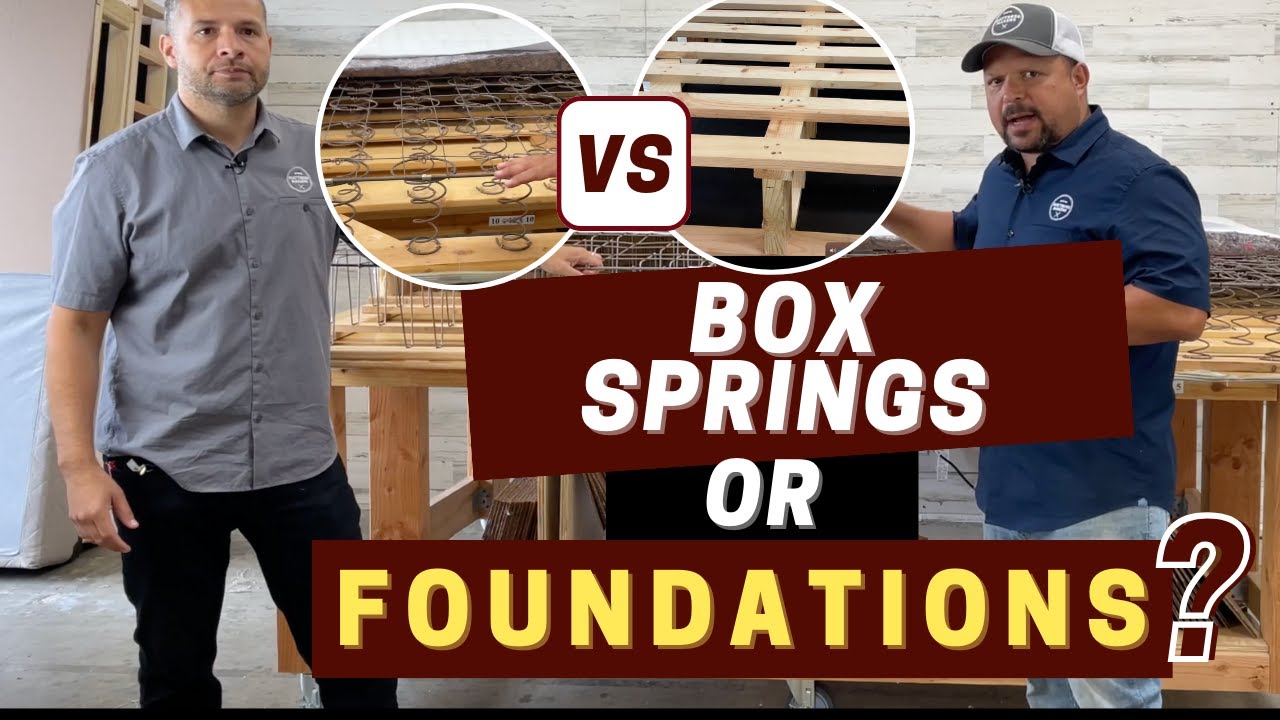
I thought I would jump in as I think some clarity is needed. When you say box spring, are you referring to a traditional box spring with active springs, hand tied or otherwise, or are you referring to a “foundation” that might be semi-flex or slatted? The distinction can make a meaningful difference depending on the type of mattress being used.

The fact that you mentioned you have a cheap store-bought mattress that is sagging, as @NikkiTMU stated, is also fairly broad. It is typical that inexpensive mattresses use lower-density foams, and some of those can be more vulnerable to softening and sagging over time. With some memory foam constructions, you can also tend to sleep more “in” the mattress rather than “on” it, which can contribute to a warmer sleeping experience. But this really comes down to the particular materials and, more importantly, how the mattress is constructed. @Tempflow for example uses an air flow channel design to expel heat, despite using high density viscoelastic memory foam. All of this is still predicated on the foundation and structure of the entire mattress set-up.

This is where, as @tammyt mentioned, the support layer and foundation become important. You really have to look at the entire mattress and what it is sitting on rather than isolating one component and trying to determine how the mattress will perform from that alone.

In today’s marketplace, it can be a slippery slope out there. Knowing and understanding what the mattress components are, how they are arranged, and what they are resting on is pretty important if you’re looking for a competent sleeping solution. There are certainly sleepers out there who can sleep on just about anything and internalize that “this is just fine,” while others really need to be fit more critically.

It is also good to know one’s price range, as almost everyone has one. You don’t want someone recommending a $14K Shifman, Vispring or Hastens when your budget is $3–5K, or some other range. At the same time, if someone has a more flexible budget, there may be construction options worth considering that wouldn’t necessarily make sense or available at a lower price point.

As far as sleeping hot, I would be careful about making this simply a matter of “memory foam is hot” or “latex is cool.” If a mattress is crafted with natural fibers such as wool, cotton, and horsehair, those materials can provide some very good moisture and heat-management characteristics. When it comes to foams, latex, with its pin-core construction, will generally allow more airflow through the material than many traditional memory foam constructions. But that doesn’t mean that every latex mattress is always going to sleep cooler than every polyfoam mattress. The design of the mattress, the thickness and density of the various layers, the cover and quilting, and how deeply you sink into the mattress can all affect how heat is managed.

The other thing you will discover is that there is more than one mattress or mattress design that may work for you. Personally, I love a firm mattress, but when I tested several Hastens mattresses, I found that their medium design worked incredibly well for me.

I recently tested a mattress from @SDMattressMakers. The Cardiff. Yes, it was a firm mattress, but the cover panel was designed a bit out of character for them and incorporated an inch of Serene foam, an inch of viscoelastic foam, and wool. This carefully thought out combination was designed to allow sleepers to get good pressure relief while the wool and the overall construction of the panel helped with heat management. It was a very comfortable tufted panel on what was otherwise a very firm mattress.

Examples like this are why I think it is necessary to look at the entire picture of the mattress design and build. Each layer can affect the overall final feel, and sometimes what appears to be a contradiction on paper, such as a firm mattress providing good pressure relief for a side sleeper, makes perfect sense once you understand how the different layers are working together.

At 5’10" and 179 lbs, primarily a side sleeper but moving around during the night, you’ve given us some useful information. But I wouldn’t necessarily jump straight to “you need a medium hybrid.” You haven’t had enough experience with different feels yet to really know whether you prefer a faster or slower response, how much you like to sink into a mattress, or how much you prefer to sleep more on top of it.

So before getting too far into specific mattresses,it would be best to know a little more about that “box spring,” how old it is, what it is actually constructed of, and whether you’re willing to replace the foundation if the mattress you ultimately choose requires something different.

Then we can start narrowing down the construction and feel that make the most sense for you.

Hope this helps,

Maverick
1 Like

Thanks for the detailed reply, really helpful context. To clarify: it’s a traditional box spring with springs inside, and it’s about 15 years old. It has some give or sag in the middle.

I’m open to replacing the foundation if needed, depending on what mattress I end up going with.

That’s a good point about not jumping to “medium hybrid” — I really don’t have much reference for how I respond to different feels yet. If it’d help, is there a way to test that in-store, or is it more about trying a few and comparing notes here as I go?

2 Likes

If it is in fact a traditional, old-fashioned spring box spring, I would generally plan on replacing it when purchasing a new mattress, unless the new mattress manufacturer specifically confirms that the foundation is compatible.

Traditional box springs are not simply a rigid platform with a mattress sitting on top. The springs in many older box springs were designed to flex and work in conjunction with the specific type of innerspring mattress they were paired with. The box spring and mattress essentially functioned as a combined suspension system, with the foundation contributing to the overall feel and support characteristics.

That becomes important when putting a modern mattress on a 15-year-old foundation. The foundation may have developed fatigue or changes in spring tension over time, and its flex characteristics may not be appropriate for the new mattress. Depending on the construction of the new mattress, excessive flex, inadequate support, or an incompatible foundation can alter the mattress’s performance and potentially contribute to premature wear.

Modern mattresses, particularly foam, latex, and many pocketed-coil hybrids, oare generally designed to work on a rigid, non-flexing foundation or platform with adequate center support and appropriately spaced slats. However, the exact requirements vary by manufacturer and mattress construction, so I would always check the new mattress manufacturer’s foundation specifications before reusing a 15-year-old box spring.

Also, don’t confuse a true spring box spring with what is often marketed today as a "box spring."Most of the common modern products called box springs are actually rigid foundations with no springs at all.

So if yours is a genuine spring-type box spring and not a semiflex that some often confuse, that is 15 years old, I wouldn’t automatically assume it can be reused with a new mattress. I’d identify exactly what type of foundation it is, what brand and mattress it was paired with originally, inspect its condition, and then verify that its construction and flex characteristics meet the requirements of the new mattress.

Maverick

3 Likes

Really appreciate the detail — that makes sense. I’ll plan on replacing it rather than assuming it’ll work, especially given the age.

On checking exactly what it is: I don’t know the original brand or what mattress it was paired with, so I’ll take a closer look and see if there’s a tag or any markings. If I can’t tell, is there a simple way to check whether it’s a genuine flexing spring-type versus one of the rigid ones marketed as a “box spring” — or is opening it up really the only way to know?

Either way, sounds like budgeting for a new foundation alongside the mattress is the safer move.

2 Likes

Hey there,

So here is my simplest way of determining if yours is a tradition or semiflex.

If you remove the mattress off the foundation, or slide it far enough to provide the necessary room, and press down firmly on the edge of the foundation. It should will have some resistance as the gauges on a traditional box spring are usually a thicker gauge, but a true flexing foundation should compress a little and then flex back when you release the pressure. You can even sit on the edge and it should compress. If it feels completely solid with virtually no movement, it is more likely one of the rigid foundations marketed as a “box spring.”

The other useful clue is visual. Since yours is about 15 years old, look closely at the fabric covering the foundation. You may be able to see imprints from the internal springs or the metal framework. If the pattern appears to be made up of squares or rectangles, that is more consistent with a semi-flex foundation. If you can see rounded or circular spring impressions, with or without some thinner rectangle imprints around them, that is more consistent with a traditional spring box spring. These are clues rather than absolute proof, but together with the flex test they should give you a pretty good idea without having to open it up.

If the cover has a zipper or fits like a fitted mattress, then by all means, just take a look, you will either see the round springs or no springs with a a metal grid like a semi-flex.

The link below is a great video by @SDMattressMakers regarding the various types of boxsprings/foundations available.

Maverick

3 Likes

Did the test — I think I found what type it is. Going to look into foundations to replace it with now, alongside the mattress itself. Will update once I narrow it down. Thanks again for the breakdown, it made this way easier to figure out.

1 Like

Glad the test worked, worldofmattress_01. Hendrik here (CBH Wood Furniture, we build solid wood bed bases), following on from the other thread.

Since you’re buying the foundation alongside the mattress, a few things to check:

  • Ask the mattress maker what they want underneath and get it in writing. Some warranties name a specific base type.
  • For slats, look for solid wood, a clear gap of about 3" or less, real thickness, and a center rail with legs down to the floor.
  • A solid platform is fine too. Just make sure it doesn’t flex, and know that with a hot sleeper a slatted base breathes a bit better.
  • Check the total height once the mattress is on. A new mattress plus a new foundation can end up much taller than your old setup.

One thing worth knowing: some bases are built to flex on purpose, like the movable slat systems common in Europe, which adjust under the shoulders and hips. That’s a different category from a sagging old box spring, and it only makes sense if the mattress is designed to work with it. If you go hybrid, a firm, flat, well-supported base is the simple, safe choice.

— Hendrik

2 Likes

Disclosure first: I’m an independent partner of Green Rest Mattress, so weigh my input accordingly. I won’t recommend any brand here.

Since you’re replacing the base and the mattress together, a few questions worth asking any seller before you buy:

  • Full layer specs. Ask for the type and density of every foam layer, especially the comfort layers on top, since those usually wear first. If a seller won’t share density, that’s useful information too.

  • What “cooling” actually means. Ask what’s physically doing it (coil core, cover fabric, latex, gel or other additives) rather than accepting the label.

  • Trial and return terms in writing. Who pays return shipping, how long the minimum break-in period is, and whether there’s a restocking fee.

  • Warranty sag depth and base requirements. How deep an impression has to be before it counts, and which foundation type the warranty requires (this ties in with what Hendrik mentioned).

Good luck, and post your shortlist when you have one.

3 Likes