Hey itisme, hope all is well.
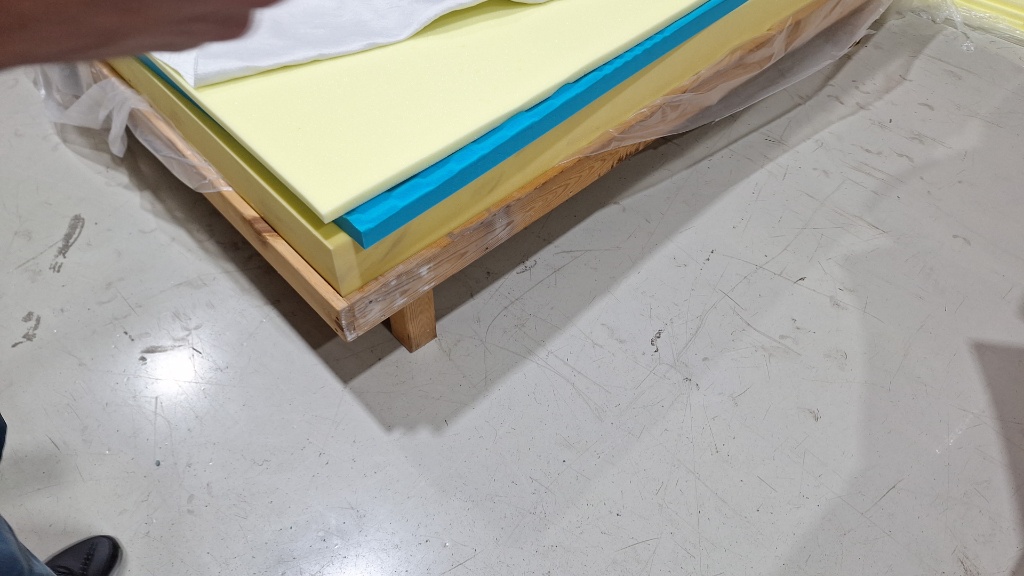
My response is going to be a bit generic as I have to convert metric to US customary and get my brain to think in terms of how this will convert to a solution for you. Your base layer is actually the key thing here, and 40 kg/m³ SK foam( High Resilience foam around 2.5lb in US terms, which is the minimum you want to be.) is genuinely good quality, well above what most retail mattresses use, which is typically why those break down so fast. To be even more confident, you might want to look at something in the 45-50kg in the metric equivalent. The Neropur comfort layer (another HR foam at the US equivalent of 4lb, which is well above the suggested minimum 2.5lb level) at 65 kg/m³ is also very dense for that type of foam, so there should not be much of a worry about those two layers at all particularly if you bump up the SK foam if available. Don’t let the weight fool you either, high-resiliency foam is specifically engineered to be lighter while lasting longer, so feeling light doesn’t mean it’s cheap.
We like to opine that a mattress is only as good as it’s weakest link/component. Having said that, you want to keep an eye on is that 2 cm memory foam top layer. Viscoelastic memory foam is designed to conform under pressure, so it will naturally feel a bit different over time compared to day one. That’s just how memory foam behaves, not a defect. 2cm is about 3/4" and we also like to say, any lower quality layer over an inch (2.54cm) can be an issue. Here at TMU we generally recommend a minimum of 4-5 lb/ft³ for memory foam for durability and longevity, at 3.43 lb/ft³ this layer falls below that threshold, which combined with its very thin 2cm (¾") profile means any comfort value it adds on day one is unlikely to be maintained long term. If you’re already anxious about softening, that thin cap might be the thing that triggers it even if the rest of the mattress is holding up perfectly. On the other hand, 2cm is not going to be significant one way or the other, and while we don’t see heat retention as a major concern for you specifically, visco foam even at this thickness can occasionally work against you on that front. It would be worth asking the manufacturer if they can swap it for a quilted cover or a thin latex layer instead. Latex is more durable and longer lasting, generally speaking.
An additional thing we talk about here at TMU and most seasoned mattress professionals will highlight is your foundation. Not sure what type of foundation you are using, but if slatted, you want those slats to be tightly spaced, under 3" and you want the slats to be rigid with no flex, not like those euroflex slats. With rigid, non flexing slats, it is easier to predict how the mattress will perform overall. The Euro flex style slats, while being paired with the appropriate mattress can work fine, you want to eliminate any possible road blocks along the way. I am speaking about wood slats here, not those thin metal slats that the mattress can push through.
But overall this spec is a real step up from typical retail builds, I think you have good reason to feel more confident about this one, with a couple of small upgrades. Based on your weight and assuming you are either a side or back sleeper.
Hope this helps,
Maverick